
Insulin Therapy: A Kid-Friendly Guide to Insulin
Understanding the types of insulin and how they help your body!
Insulin works like a special key that helps sugar get into your body’s cells so you can have energy to play, learn, and grow.
There are different kinds of insulin, and each one starts working at a different time.
Fast-Acting Insulin
Basal Insulin (Background Insulin)
Fast-Acting Insulin
This type of insulin helps your body when you eat meals or snacks, or when your blood sugar is too high.
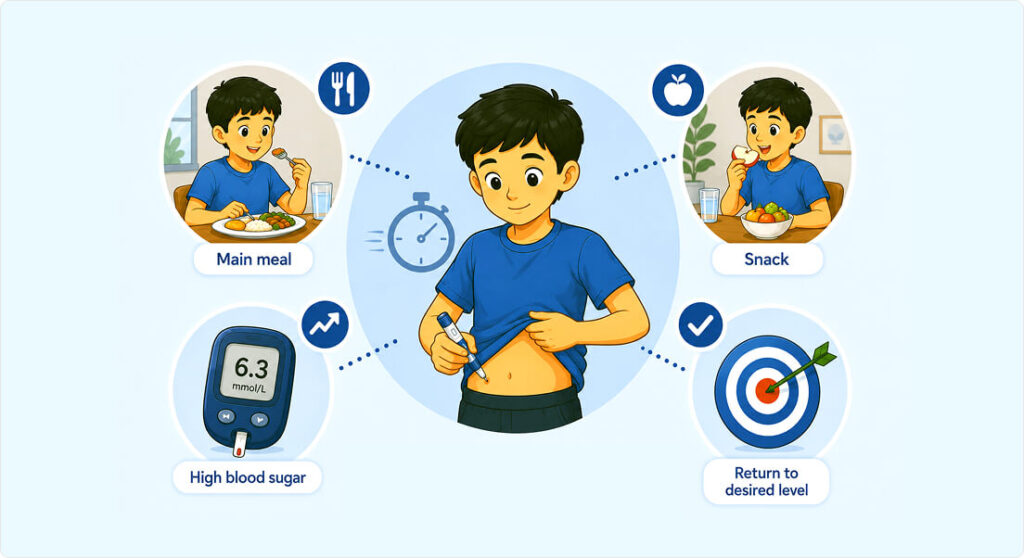
There are three types:
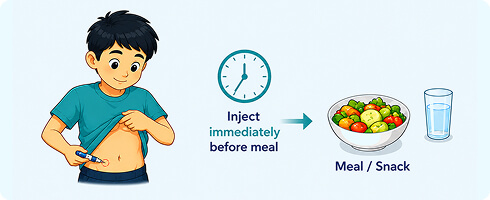
Ultra Rapid-Acting Insulin
Examples: Fiasp (faster aspart), Lyumjev (ultra rapid lispro)
Starts working: in 2–5 minutes
When to take it: right before eating
Peak: about 30-45 Minutes
Lasts: 1.5-3 hours
Think of this as the fastest superheros—it jumps into action almost instantly!
Rapid-Acting Insulin
Examples: Humalog (insulin lispro), Novorapid/Novolog (insulin aspart), Apidra (insulin glulisine)
Starts working: in 15-20 minutes
When to take it: 15 minutes right before a meal or snack
Peak: 1.5–2.5 hours
Lasts: 2–5 hours
This superhero is fast and reliable—great for mealtimes and reducing high blood sugar!
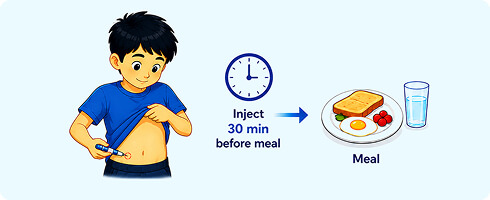
Short-Acting Insulin
Examples: Actrapid (regular insulin), Humulin R (regular insulin)
Starts working: about 30-45 minutes after injection
When to take it: 30 minutes before eating
Peak: 2–3 hours
Lasts: 5–7 hours
This helper needs more time to get ready—so you take it 30 minutes earlier
Basal Insulin (Background Insulin)
This insulin works all day and night, giving your body a steady amount of insulin.
You take it once or twice a day depending on the type.
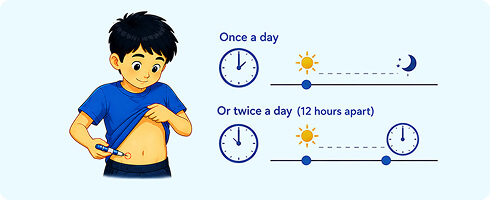
Long-Acting Basal Insulin
Examples: Glargine (Lantus, Basaglar), Detemir (Levemir)
Has no peak (very smooth and steady)
Usually taken once a day on specific time
Lasts 18–24 hours on average according to type
Think of it as a night light – always on, always steady.
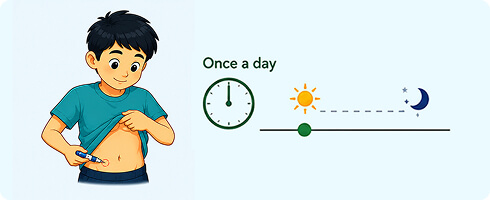
Ultra Long-Acting Basal Insulin
Examples: Degludec (Tresiba), Glargine U300 (Toujeo)
Also has no peak
Taken once a day
Lasts 36–40 hours on average
This is the longest-lasting helper – it keeps going even into the next day!
Using Insulin Syringes
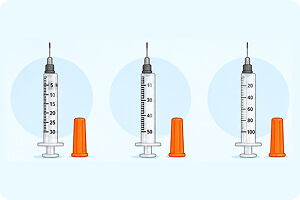
Syringes come in different sizes:
1/3 cc = 30 units
1/2 cc = 50 units
1 cc = 100 units
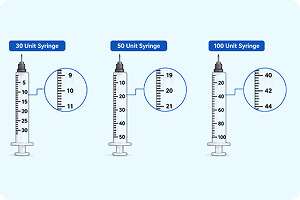
On the syringe:
Each small line = 1 unit (30 & 50-unit syringes)
Each small line = 2 units (100-unit syringes)
Some syringes have half-unit markings
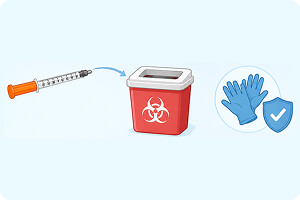
Needles and syringes should be disposed of in a manner consistent with Universal Precautions and local waste disposal laws.
Sites of injection
Insulin works best when it is injected into a layer of fat under the skin, above the muscle tissue.
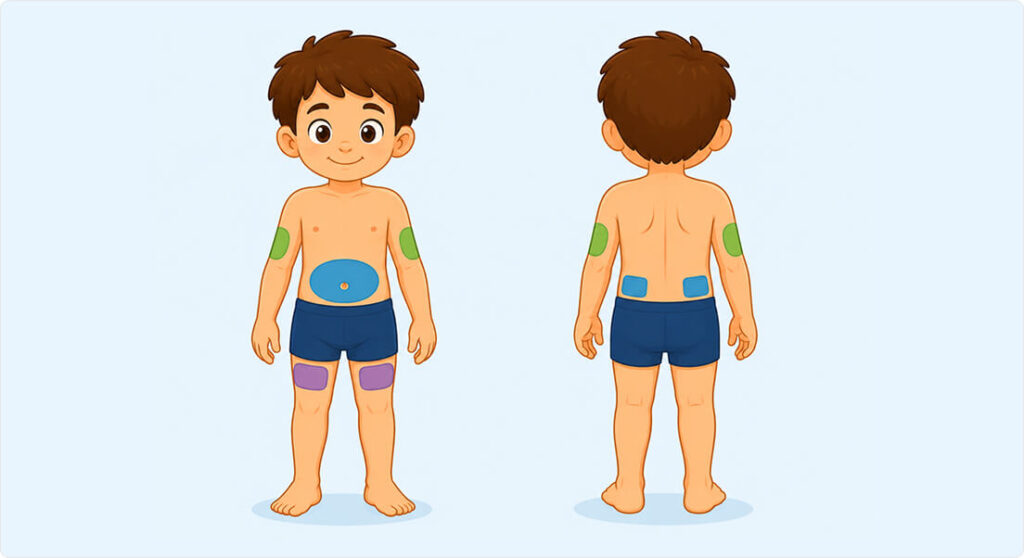

Best spots: Abdomen (tummy), Thighs, Buttocks, Upper arms
Rotate your injection spots
How do we inject insulin?

Step 1: Prepare the supplies
Insulin pen or syringe
New needle
Alcohol swab (if needed)

Step 2: Wash you hands

Step 3: Prepare the dose
Make sure the number of units is correct.
Use a new needle every time.

Step 4: Choose an injection site
Abdomen, arm, thigh, or buttock.
Make sure the spot is not painful or lumpy.
Step 5: Gently pinch the skin
Especially for the arm and thighs in younger children.
Step 6: Insert the needle at a 90° angle
Step 7: Press the pen or syringe slowly
Wait 10 seconds before removing the needle to ensure the full dose enters.
Step 6: Dispose of the needle safely
Use a sharps disposal container.
Storing Insulin
To keep your insulin working well:
Check the storage instructions on the package
Check the expiration date
Shelf Life
Opened vials: good at room temperature (below 25°C) for 30 days
Opened pens/cartridges: good for less than 30 days, depending on brand
Unopened insulin: keep in the refrigerator at temperature (5 to 8 degrees Celsius) until expiration date