
Why?
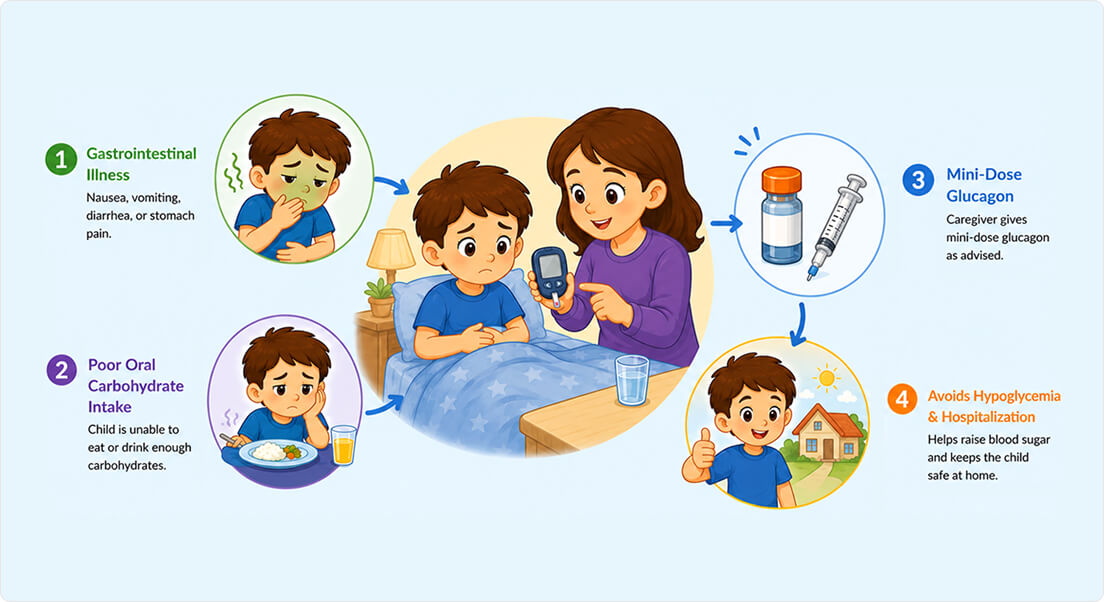
Children with gastrointestinal illness and/or poor oral carbohydrate intake with a blood glucose ≤ 4.4 mmol/L can benefit from mini-dose glucagon by their caregivers at home to avoid hypoglycemia and hospitalizations.
How?
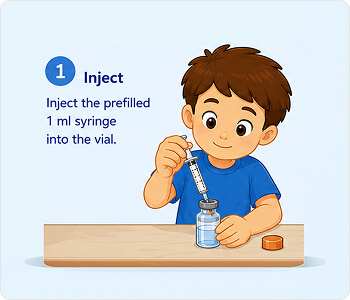
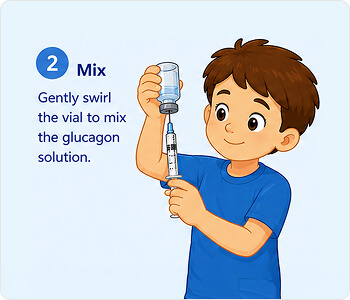
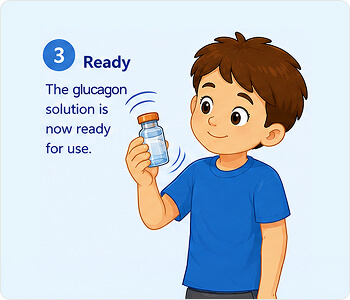
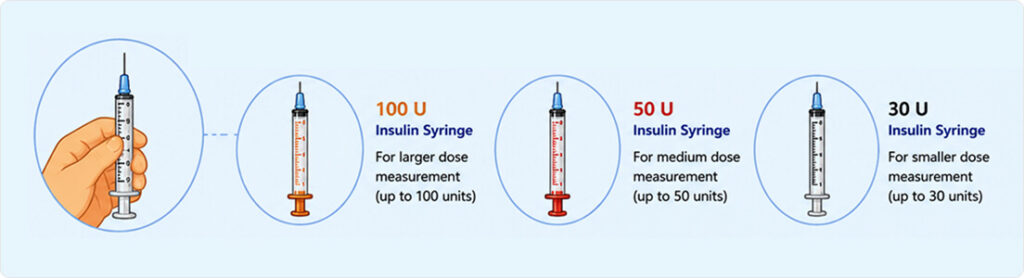
Inject the prefilled 1 ml syringe into the vial and swirl the vial to mix the glucagon solution
A 100 U, 50 U, or 30 U insulin syringe is used to administer the dose of glucagon solution (1 unit ~10 μg glucagon).
What is the proper dose?
The dose is age based.

2 units for children less than 2 years old
1 unit/year for children 2-15 years old (with a maximum dose of 15 units).
Example of mini dose
If blood glucose failed to rise between 3.3- 5 mmol/l the first 30 minutes, a repeat injection to be given using double the dose and can be repeated every 30-60 minutes for a maximum of 5 times during 24 hours. Usually after the second dose if there is no response it is advisable to go to the hospital for treatment.
Where to inject?
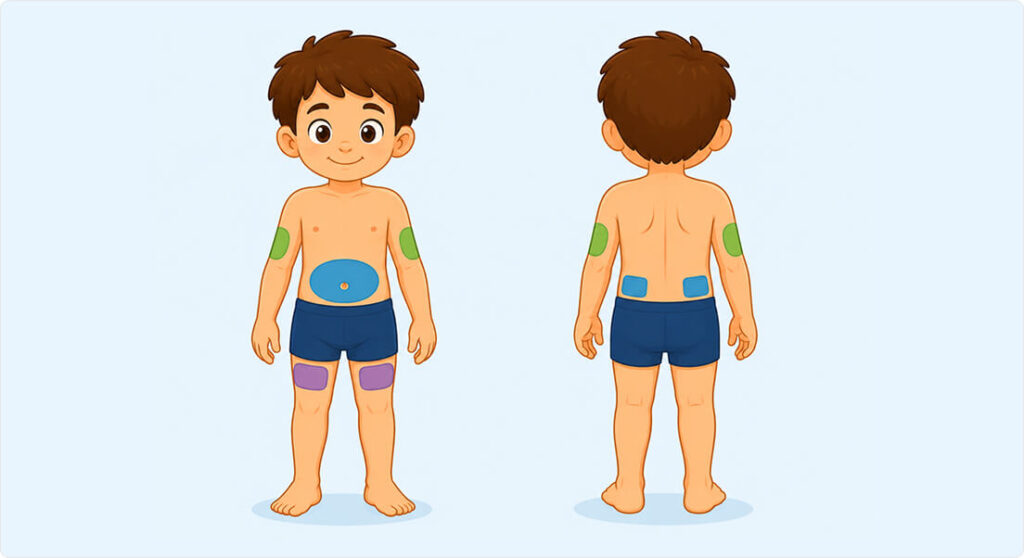
The dose is administered subcutaneously at the same insulin injection sites
After the injection
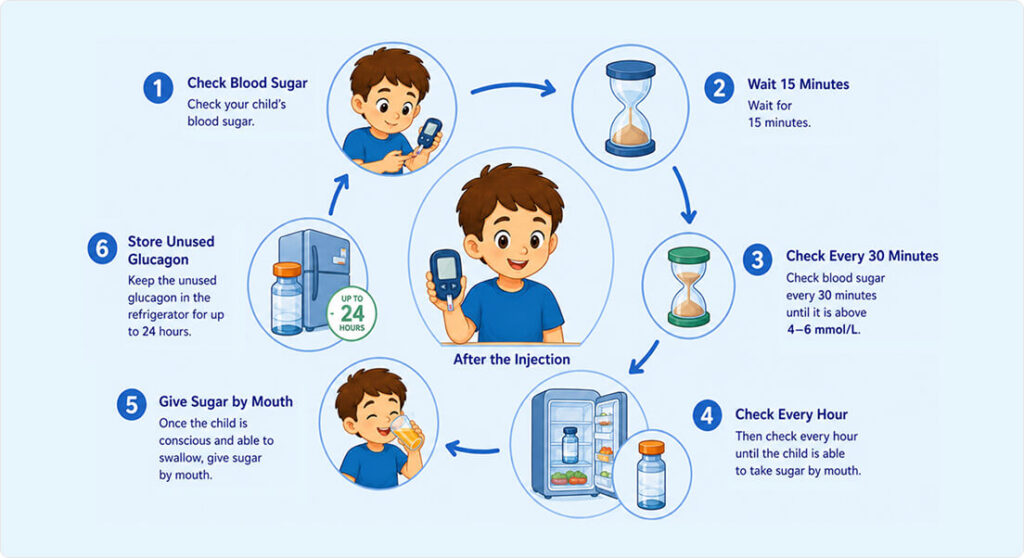
Check your child’s blood sugar in 15 minutes and then every 30 minutes until blood sugar is above 4-6 mmol/L. Then every hour until the child is able to take sugar by mouth.
Keep the unused glucagon in the refrigerator for up to 24 hours.
Note:
Don’t forget to get a replacement glucagon kit from your pharmacy
References:
ISPAD Clinical Practice Consensus Guidelines 2022: Sick day management in children and adolescents with diabetes