
What Are Ketones?
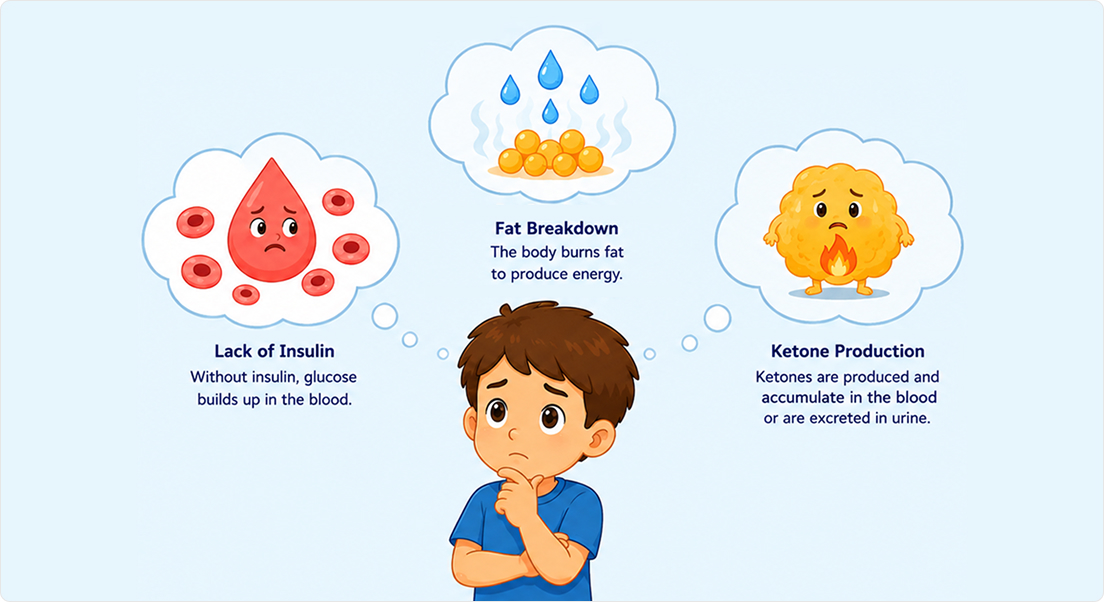
Your body needs energy to play, learn, and grow. Most of the time, this energy comes from sugar (glucose) in your blood. With the special help from insulin that acts like a key it helps the sugar enter your body’s cells so you can use it for energy.
But what if there isn’t enough insulin? Then your body can’t use sugar for fuel, so it starts to use fat instead.
When that happens, ketones appear!
When Ketones Build Up
Too many ketones in the blood can make you very sick, this is called Diabetic Ketoacidosis (DKA).
Warning Signs:
-
Nausea
-
Vomiting
-
Fast or deep breathing
-
Fruity or nail-polish removal smell on your breath
-
Feeling very tired
If you notice these signs, tell an adult and get help from a doctor immediately!

Pump Alert: If your insulin pump cannula (the tiny tube under your skin) is kinked, blocked, or disconnected, insulin can’t get to your body.
How Do We Check for Ketones?
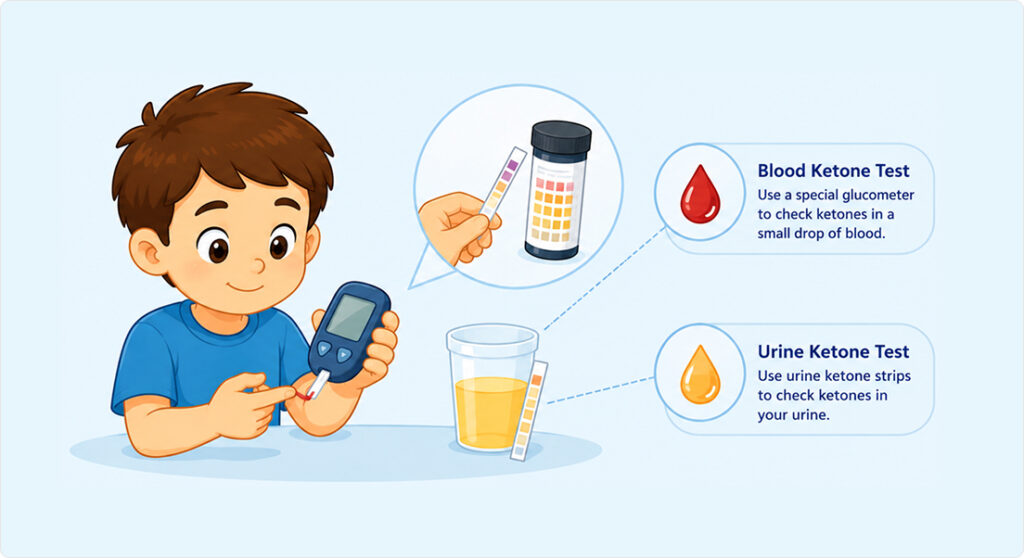
You can check ketones in the blood with special glucometer, or in urine using urine ketone strips.
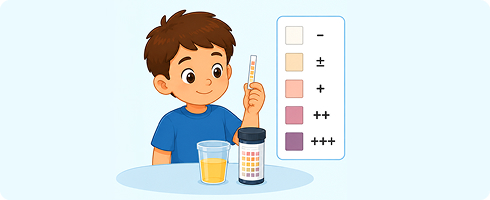
Urine Ketone Test
Use ketone urine strips
Dip and pick up the strip in your pee, wait 30-60 seconds and watch the color change
Colors show ketone levels:
😃 Negative (-) → all clear
🙂 Trace (±) → small amount
😟 Small (+)
⚠️ Moderate (++) → may need help
🚨 Large (+++) → urgent
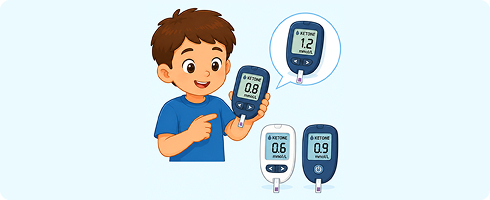
Blood Ketone Test
Some glucometers can measure blood ketones too
Just use ketone strips and test like regular blood sugar
When Should You Check?
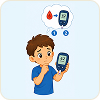
Your blood sugar is over 13.9 mmol/L (250 mg/dL) two times in a row

You feel sick, have a fever, or vomiting
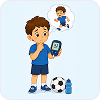
You’re about to exercise and sugar is over 15 mmol/L (270 mg/dL)
Understanding Ketone Levels
Diabetic Ketoacidosis (DKA)
What To Do If Ketones Appear
Drink water or sugar-free drinks to help flush ketones
Take a correction dose of fast-acting insulin every 2 hours (max 3 times)
Check blood sugar and ketones every 2 hours if sugar >13.9 mmol/L
Do not exercise until ketones are gone and sugar is normal