
What is Diabetes?
Meet your body’s energy helper – Insulin!
Inside your body, there’s a little organ called the pancreas. Its job is to make insulin, that acts like a key. When you eat food, your body turns it into sugar (called glucose) — the fuel that gives you energy to play, think, and grow!
The Different Types of Diabetes
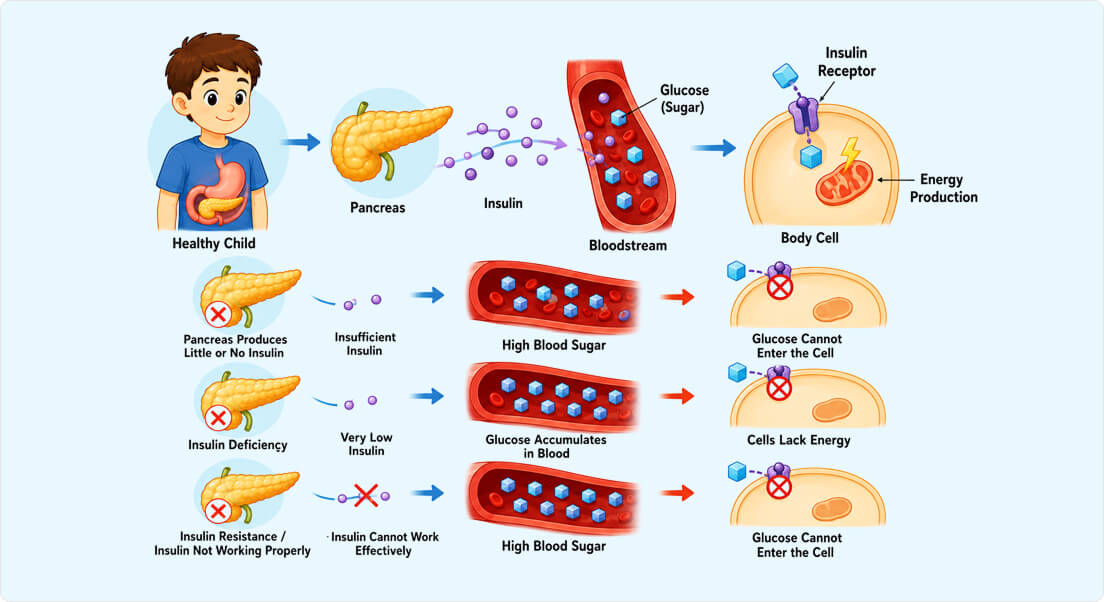
Insulin helps move that sugar into your body’s cells, just like a key opens a door! But when your body doesn’t make insulin or can’t use it well, sugar stays in your blood instead of going into your cells, that’s called diabetes.
Type 1 diabetes
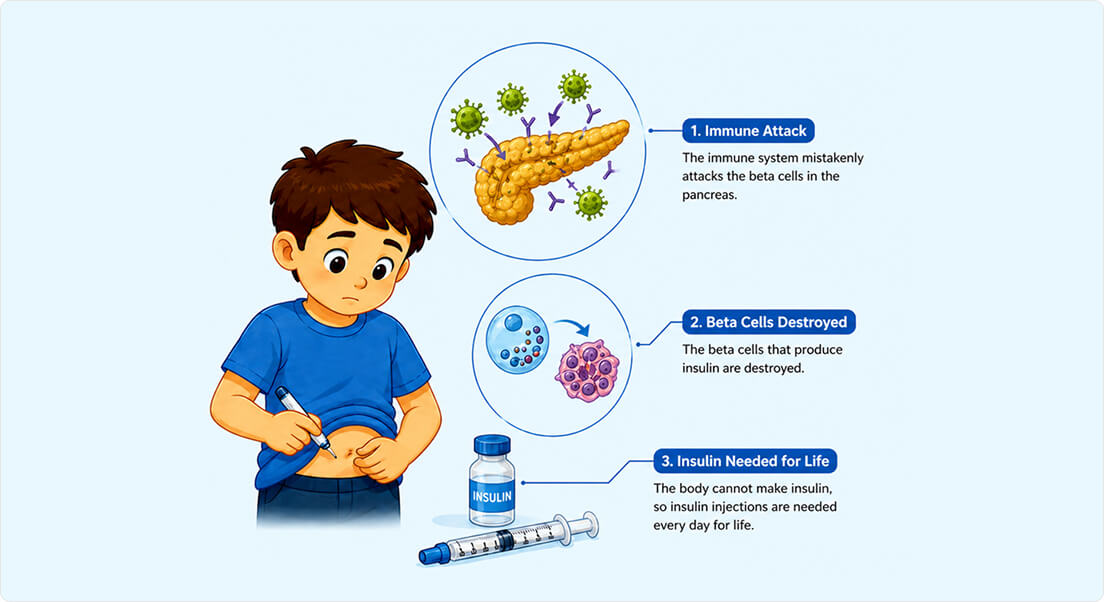
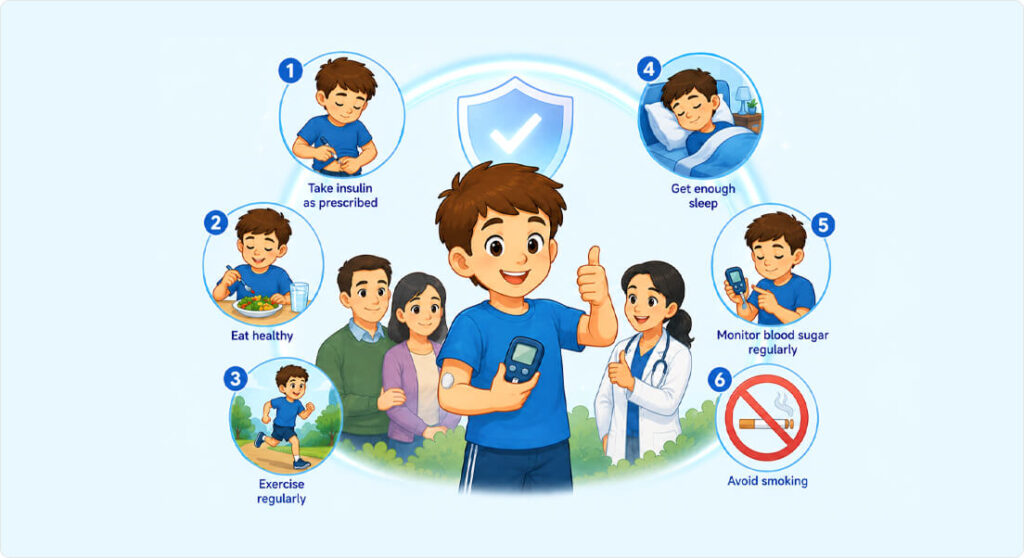
This is the kind most kids have. The body’s defense team (immune system) gets a bit confused and attacks the pancreas by mistake, so it can’t make insulin anymore. That’s why kids with Type 1 diabetes need to take insulin every day, it’s their superpower fuel!
Neonatal Diabetes
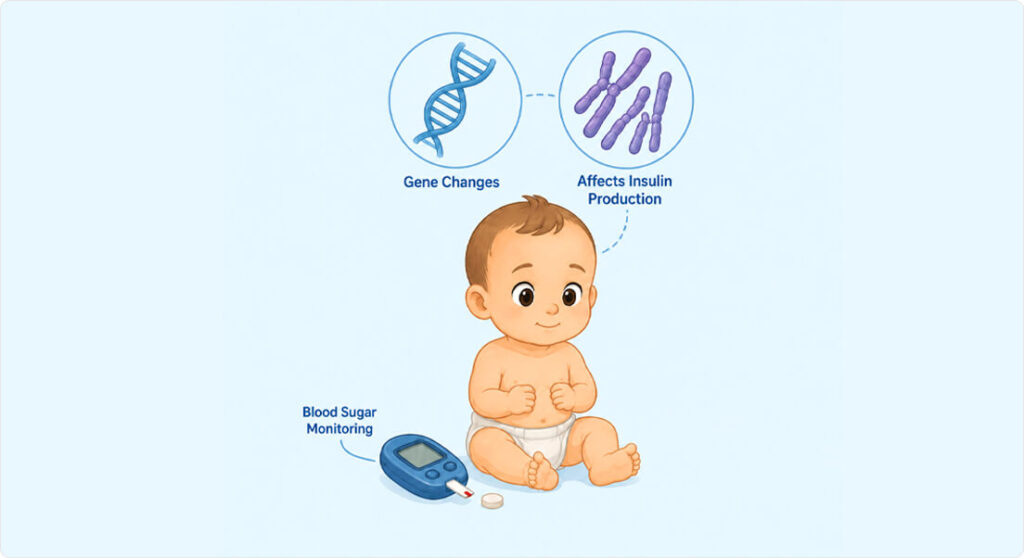
Some babies are born with diabetes very early in life, before they turn 6 months old.
It can happen because of a tiny change in their genes. Doctors take special care of these little ones to help them grow healthy.
Maturity-Onset Diabetes of the Young (MODY)
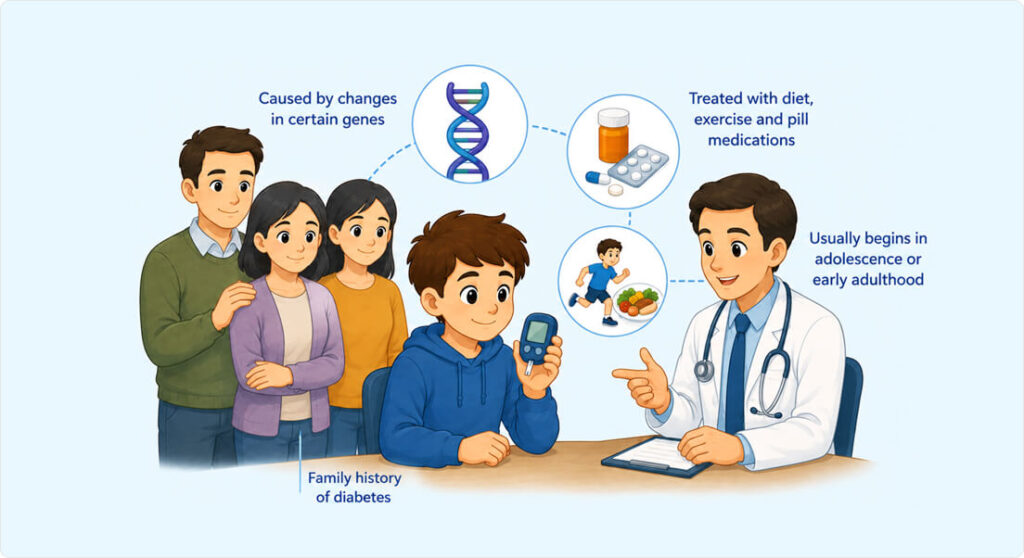
This type runs in families, passed from parent to child through genes. Kids with this kind sometimes take medicine or just eat healthy and exercise instead of using insulin.
How doctors find out that you have diabetes
Doctors will check your blood sugar and another test called A1C.
These help them understand what type of diabetes you have and how to treat it.
Signs That Show Up
If you notice these signs, it’s time to tell a grown-up and see your doctor:

Feeling very thirsty
Going to the bathroom a lot (or bed-wetting again)
Feeling very hungry
Feeling tired
Losing weight
Getting grumpy or moody
Seeing blurry
Cuts or infections that take a long time to heal
How We Take Care of Diabetes
Complications
Early diagnosis, appropriate treatment and ongoing support are key to effectively managing diabetes in children and reducing the risk of complications, as lack of good diabetes control can lead to serious complications such as:
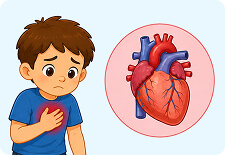
Heart complications
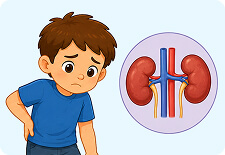
Kidney complications
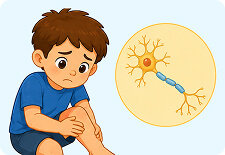
Nerves complications
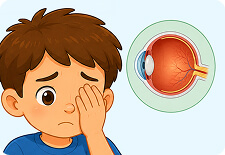
Eye complications – Retina & vision
Remember!
You are not alone!
Many kids around the world have diabetes too.
With good care, support, and learning, you can do anything you dream of.
For Parents & Caregivers
Children with diabetes need love, guidance, and routine.
Encourage independence, keep communication open, and make diabetes care a part of everyday life, not the center of it.