
What does a high blood sugar level mean?
Your body needs sugar (glucose) for energy, it’s like fuel for your cells.
When your blood sugar gets too high, it means there’s too much sugar in your blood and not enough insulin to help move it into your cells.
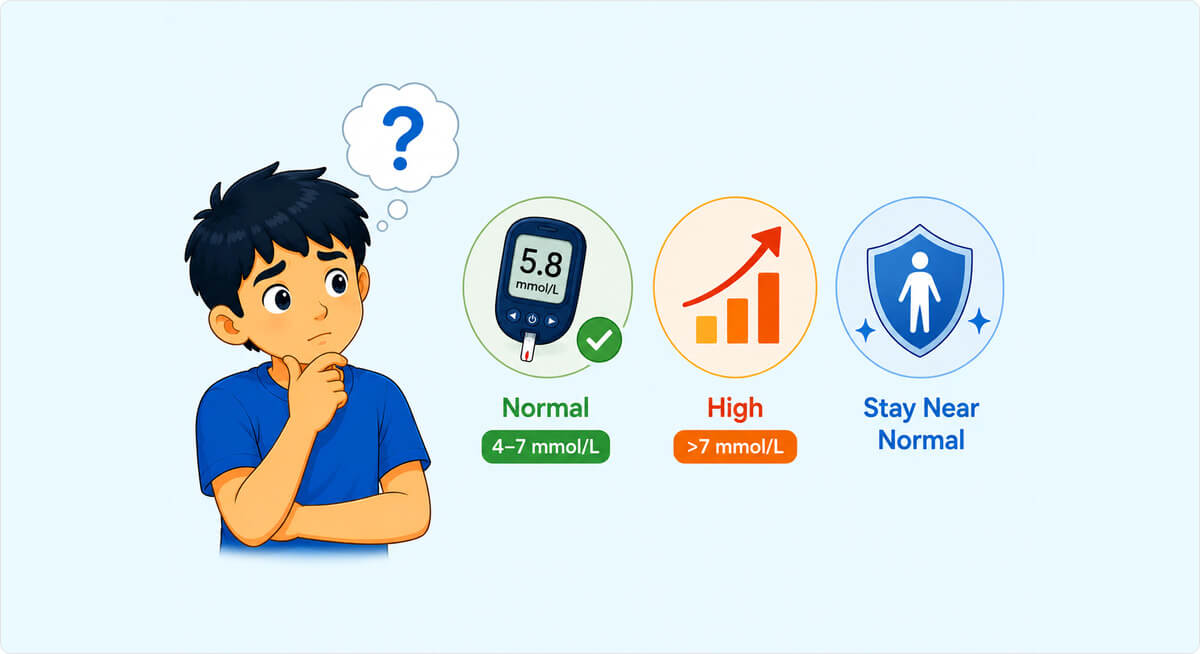
For most people without diabetes, normal blood sugar is between 4–7 mmol/L.
For kids and teens with diabetes, sugar levels can go higher sometimes and that’s okay, but it’s important to bring them back down safely.
Why is high blood sugar a problem?
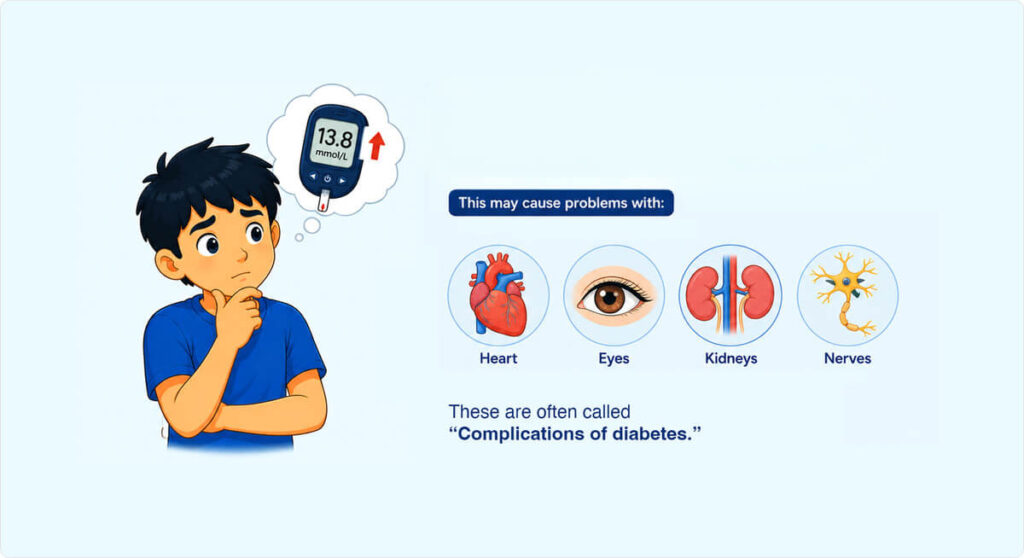
If blood sugar stays high for a long time, it can make your body tired and damage important parts like:
- The heart
- The eyes
- The nerves
- The kidneys
This may cause problems with the heart, eyes, kidneys and nerves. These are often called “complications of diabetes.”
That’s why keeping your blood sugar close to your target range helps your body stay strong and healthy
What are good blood sugar targets?
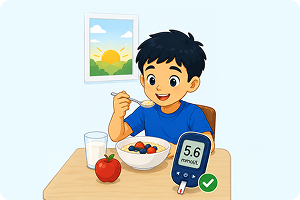
Before breakfast:
4–7 mmol/L (70–126 mg/dL)
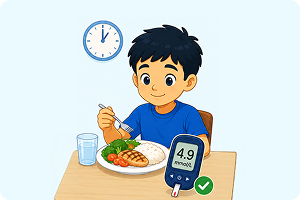
Before meals:
4–7 mmol/L (70–126 mg/dL)
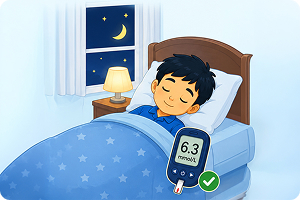
At bedtime:
5–8 mmol/L (90–144 mg/dL)
If you use a continuous glucose monitor (CGM), aim for your sugar to stay between 3.9–10 mmol/L (70–180 mg/dL) most of the time.
That’s called Time in Range (TIR) and your goal is to stay in range more than 70% of the day!
Tips to help you achieve these levels:

Check your blood sugar before meals and at bedtime.
Every time you take insulin for food, think about:
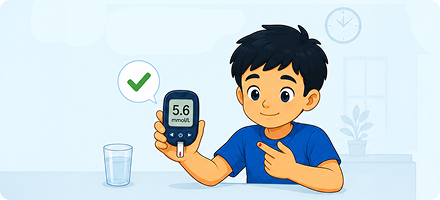
Your blood sugar before meals

The amount of carbohydrates (carbs) in your food
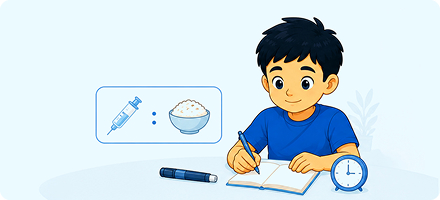
Your insulin-to-carb ratio (how many grams of carbs are covered by 1 unit of insulin) this is your ICR
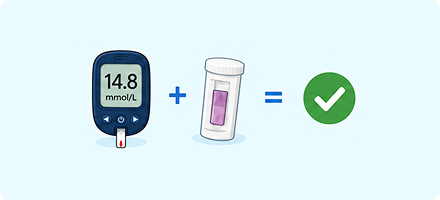
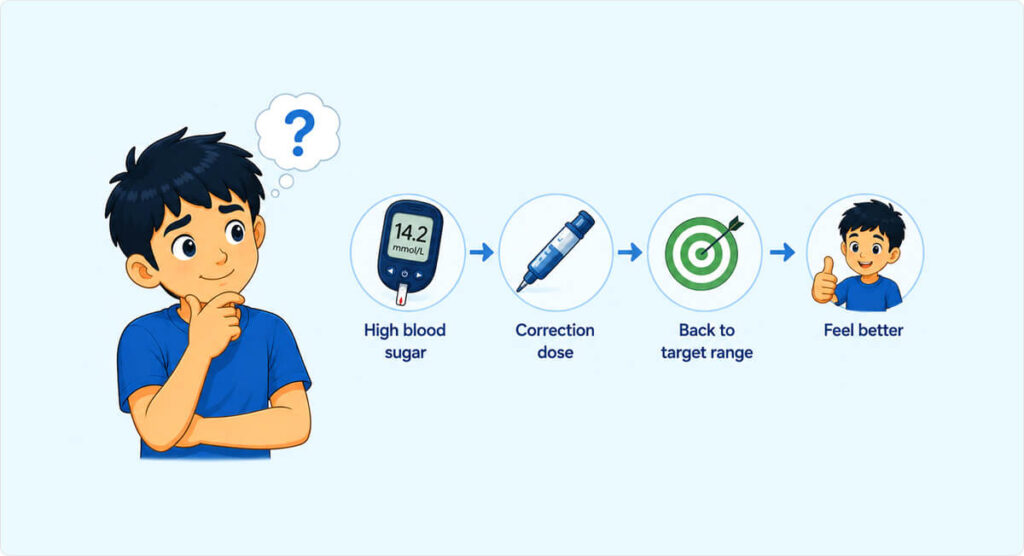
If your sugar is 14 mmol/L or more, check for ketones. If there are no ketones, take a correction dose of insulin.
-
Blood sugar result:
13 mmol/L -
Meal contains:
30 g carbohydrates -
Percentage at lunchtime:
1 unit for every 10g carbs
-
Did I count my carbs correctly?
-
Is my insulin injection site okay or lumpy?
-
Did I take my insulin before I ate?
-
Did I forget to take insulin for snacks?
-
Do I need to change my insulin-to-carb ratio?
-
Am I getting enough basal (long-acting) insulin?
-
Am I not feeling well?
What should you do?
High sugar doesn’t mean you did something wrong, it just means your body needs a little more help balancing insulin and food.
Change one at a time and then wait 2-3 days to see if the problem is resolved.
Don’t ignore high sugar — take action!
-
Types of insulin is best: Basal Insulin
Check your blood sugar level before bed to make sure it’s within your target range
Check your blood sugar level at 3 a.m.
If it exceeds 5 mmol/L, increase the evening dose of basal insulin by 1-2 units. If it is too low (less than 5 mmol/L) or you have hypoglycemia, reduce the evening dose by 1-2 units or 10-20% and repeat your blood sugar check over the next two nights at 3 a.m.
-
Types of insulin is best: Breakfast insulin
Did you eat more carbs for breakfast than you think?
Check if you’re eating more carbs than you think.
Maybe you need to change your ICR, consult your Diabetes Care Team.
-
Types of insulin is best: Lunchtime Insulin
Is the amount of carbs at lunch correct?
Count your lunch carbs again.
Do you take insulin when snacking?
. Always take insulin for snacks >10g carbs.
Maybe you need to change your ICR, consult your Diabetes Care Team.
-
Types of insulin is best: Dinner Insulin
Is the carbohydrate ratio for tea time correct?
Count carbs at dinner or tea.
Do you take insulin when snacking?
Take insulin for snacks (>10g carbs).
Maybe you need to change your ICR, consult your Diabetes Care Team.
Exercise requires a lot of energy:

The right balance between blood sugar and insulin is needed in the body during exercise.
Glucose is stored in the liver and muscles in the form of glycogen.
Muscles consume their glycogen stores first. Insulin allows glucose from the bloodstream to enter the muscles to produce energy.

Having large amounts of insulin puts you at risk of hypoglycemia.
Exercise may also raise your blood sugar level.
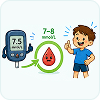
Try to keep your blood sugar level between 7-8 mmol/L before and during exercise.