
Department Mission
We work to understand the metabolic signaling that goes wrong in diabetes and obesity — the pathways behind dyslipidemia, oxidative stress and insulin resistance — and to turn that understanding into better ways of identifying who is at risk, predicting who will develop complications, and matching patients to the right treatment.

The department studies the molecules that regulate how the body handles fat and sugar, and what happens to them in obesity, type 2 diabetes and MAFLD. Our work falls into four connected areas.
the angiopoietin-like protein family (particularly ANGPTL3 and ANGPTL8), urocortin 3, and DNAJC27, and how they shape insulin secretion, lipid metabolism and cellular stress.
irisin (FNDC5), meteorin-like protein (METRNL) and the uncoupling proteins, including how they change after bariatric surgery.
how GLP-1/GIP dual agonists such as tirzepatide, pioglitazone and metabolic surgery act on adipose tissue, beta-cell function and insulin sensitivity, alone and in combination.
blood-based protein, microRNA and metabolite signatures that identify who needs a sleep study and whether treatment is working.
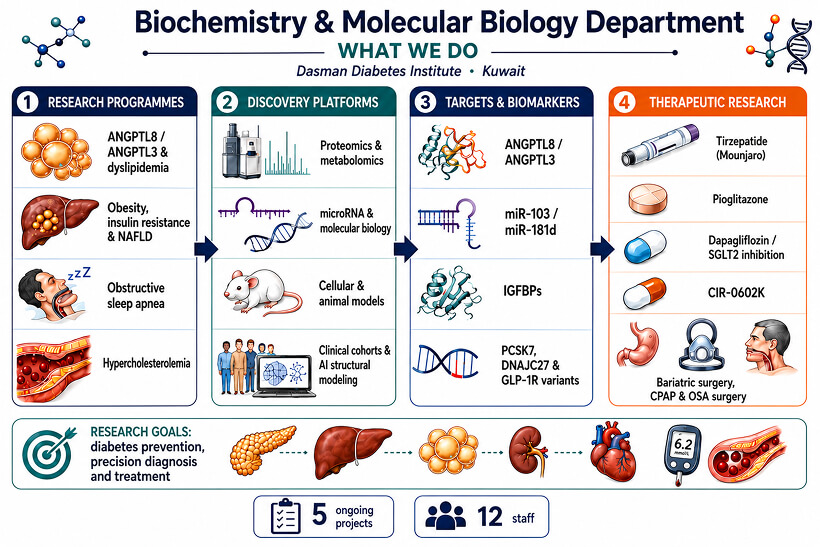
We combine targeted proteomics, transcriptomics and genomic data with cell models, knockout animal models and samples from patients, so that findings in the laboratory can be checked against what happens in people.
Kuwait has one of the highest rates of obesity and type 2 diabetes in the world, and fatty liver disease is rising alongside them. Both conditions are largely silent until they are advanced, and the tests used to diagnose fatty liver are invasive and expensive. Better blood-based markers would allow doctors to identify people at risk years earlier, when the disease is still reversible.
The same work also helps explain why patients respond differently to the same treatment. Understanding those mechanisms is what makes it possible to tailor therapy to the individual rather than treating everyone the same way.
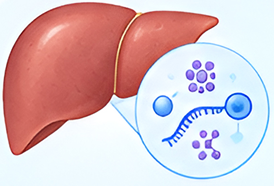
Earlier, non-invasive detection of fatty liver disease (NAFLD/NASH) using circulating microRNA and protein markers, reducing reliance on biopsy.
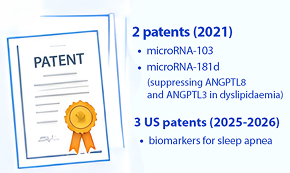
Five granted-patents: two in 2021 on microRNA-103 and microRNA-181d for suppressing ANGPTL8 and ANGPTL3 in dyslipidaemia, and three US patents granted between 2025 and 2026 on biomarkers for sleep apnea.
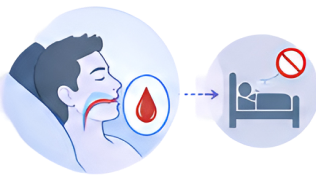
A blood-based triage route for obstructive sleep apnea that could reduce unnecessary referrals to Kuwait’s limited sleep laboratory capacity
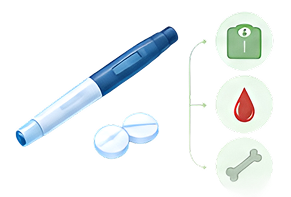
Evidence on combination therapy — tirzepatide with pioglitazone — to inform how weight, glycaemic control and bone health are managed together in type 2 diabetes.
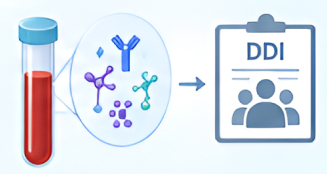
Biomarker panels that can be carried into DDI clinical trials and, ultimately, into routine care in Kuwait.
Kuwait has one of the highest rates of obesity and type 2 diabetes in the world, and fatty liver disease is rising alongside them. Both conditions are largely silent until they are advanced, and the tests used to diagnose fatty liver are invasive and expensive. Better blood-based markers would allow doctors to identify people at risk years earlier, when the disease is still reversible.
The same work also helps explain why patients respond differently to the same treatment. Understanding those mechanisms is what makes it possible to tailor therapy to the individual rather than treating everyone the same way.
The department studies the molecules that regulate how the body handles fat and sugar, and what happens to them in obesity, type 2 diabetes and MAFLD. Our work falls into four connected areas.
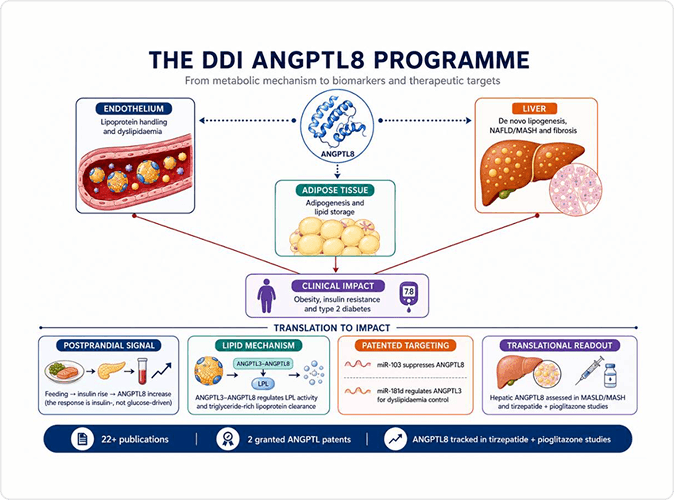
Our work sits under DDI Strategic Direction 3: Pathophysiology of Diabetes and Its Complications (2024–2028). The programme is to discover, develop and deliver therapeutic targets and biomarkers in metabolic disease, diabetes and its complications, and to test their translational potential.
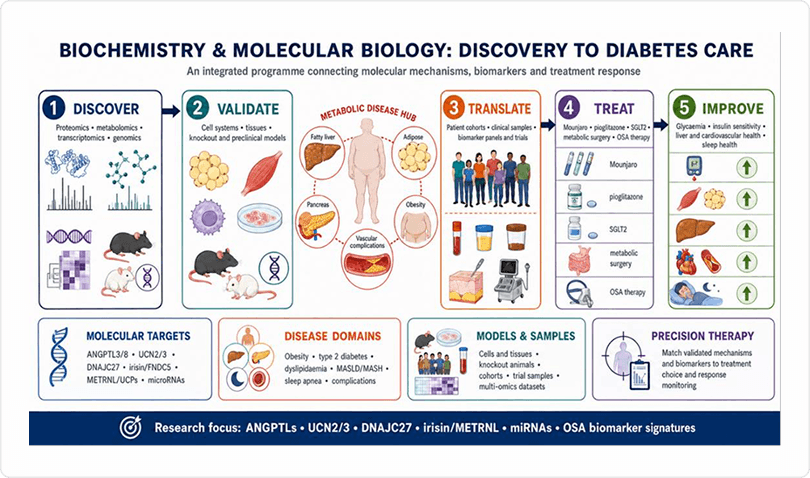
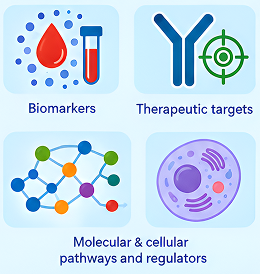
map candidate markers to the molecular and cellular pathways they act through, and identify the regulators involved.
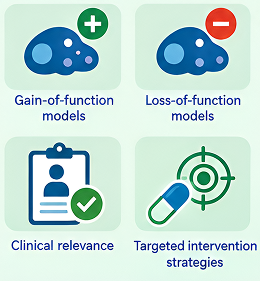
establish clinical relevance using gain- and loss-of-function models, and build intervention strategies around the validated targets.
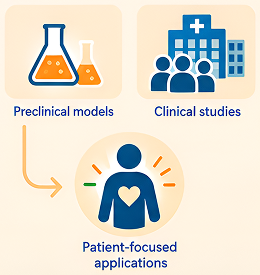
test therapeutic potential in preclinical models and in clinical studies, feeding directly into DDI’s translational research programme.
Three projects carry this forward: the role of microRNAs in NAFLD/NASH progression and therapeutic targeting; the role of the ANGPTL protein family in NAFLD; and the impact of GLP-1/GIP dual agonists with pioglitazone on adipose tissue metabolism, insulin sensitivity and beta-cell function.
The department works with diabetes and metabolic research centres in North America, Europe and the Gulf, alongside national partners in Kuwait. These relationships bring in expertise the department does not hold internally — insulin clamp physiology, beta-cell biology, sleep surgery — and give findings from Kuwait a route into larger international studies.
Our publications, projects and grants are listed on the KFAS Research Portal:
BMB Staff Description

Head of Department, Biochemistry & Molecular Biology


© 2026 Dasman Diabetes Institute. All rights reserved.