




Annual Foot Assessment
Who it’s for
Every patient with diabetes, once a year at minimum, more often if your risk rating calls for it.
What it is
A full check of your skin, nails, foot shape, circulation and feeling in your feet.
What it is
A full check of your skin, nails, foot shape, circulation and feeling in your feet.
What it is
A full check of your skin, nails, foot shape, circulation and feeling in your feet.
For more information on the circulation assessment and nerve testing, click on the button below.
Ulcer Care & Management
Specialist assessment and treatment of diabetic foot ulcers and other foot wounds. Our podiatry team works to support wound healing, relieve pressure from affected areas, manage contributing risk factors, and reduce the risk of infection, recurrence, and serious complications.
Vascular Screening
Assessment of blood circulation to the feet to identify signs of reduced blood flow. Early detection of vascular problems is important because poor circulation can affect wound healing and increase the risk of serious diabetic foot complications. At your podiatry assessment, we will complete an Ankle Brachial Pressure Index (ABPI) and a Toe Brachial Pressure Index (TBPI). This will can help us determine whether circulation is adequate and whether additional vascular investigation or referral may be appropriate.
To know more about the process, view the videos below…

Ankle Brachial Pressure Index (ABPI) | Diabetic Foot Assessment
Toe Brachial Pressure Index (TBPI) | Diabetic Foot Assessment
Neuropathy Testing
Assessment of the nerves in the feet to identify diabetic peripheral neuropathy, which can reduce the ability to feel pain, heat, pressure, or injury. Identifying reduced sensation early allows patients to take appropriate precautions and helps our team determine their level of foot-care risk. At your podiatry assessment, we will complete the following neurological assessments.
These are quantitative assessments that test sensory function and can help identify changes associated with peripheral neuropathy. Results can be recorded and monitored over time, making the assessment useful for identifying changes in neurological function and assessing foot-risk status; allows us to provide appropriate foot-care advice and help reduce the risk of unnoticed injuries, pressure damage and ulceration.
To know more about the process, view the videos below…
Monofilament Test | Diabetic Foot Assessment
Neurothesiometer Test | Diabetic Foot Assessment
Footwear Guidance
Personalized advice on selecting and wearing appropriate footwear to protect your feet from excessive pressure, friction, and injury. Our podiatry team can help you understand what features to look for in everyday footwear and, when appropriate, recommend footwear options designed to accommodate high-risk feet or foot deformities.
Footwear Advice
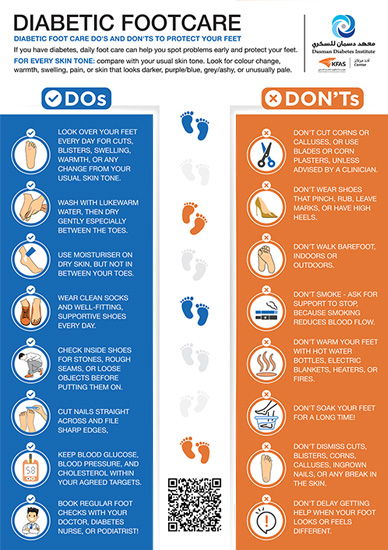
Diabetic Footwear
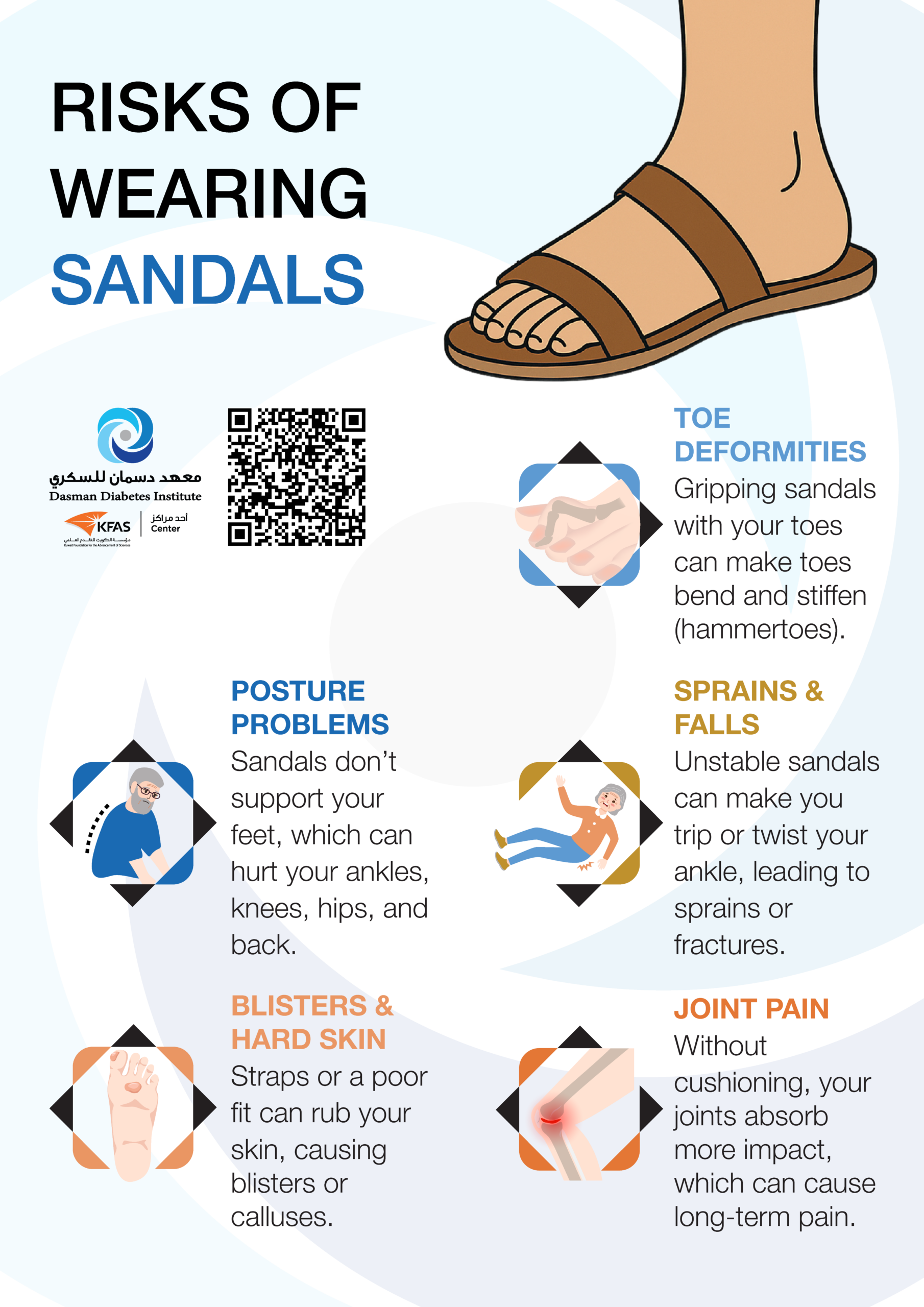
Risks of Wearing Sandals
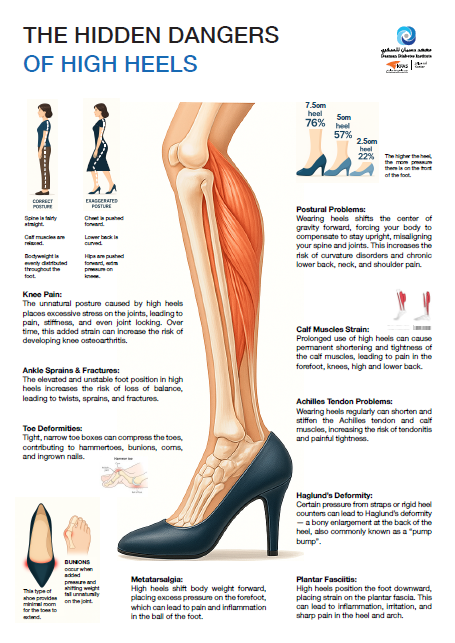
Dangers of High Heels
Charcot Foot Care
Specialist assessment and ongoing management of Charcot foot, a serious diabetes-related condition that can cause weakening and changes to the bones and joints of the foot. Early diagnosis and appropriate offloading and monitoring can help protect the foot, limit deformity, and reduce the risk of ulceration and other complications.
Stages of Charcot Foot
The Active Stage:

Your foot bones are soft and break easily.
Your foot will be red, hot and swollen.
Your foot will change shape if it is not managed correctly and quickly.
Specialist below-knee footwear to support your foot bones and prevent changes to the shape of your foot.
The Active Stage Treatment Options
The aim of treatment during the active stage is to prevent changes in the shape of your foot, by using either a total contact cast or removable below knee cast walker to support the bones in your foot.
The Chronic Stage:
Your foot bones have become firm and no longer break easily.
Your foot shape is permanent.
The redness, swelling & heat has resolved.
You need specialist footwear to support the change in foot shape and prevent foot ulcers.