
What is a Sick Day?
A sick day happens when your body is fighting germs, pain, or illness. This can make blood sugar rise because your body releases special hormones that fight the sickness but also make Sugar Sneaks stronger.
Illnesses that can cause high blood sugar (Sugar Sneaks attack!):
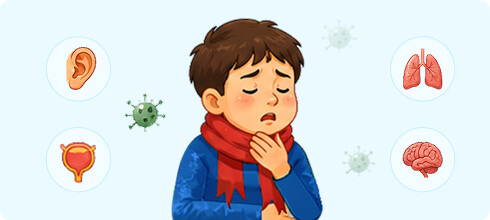
Throat, chest, ear, or urine infections
Trauma and pain

Flu, cold, viruses
Some medicines like steroids
Sick-day rules
Following these steps helps keep your blood sugar in check so you don’t get a serious sick feeling called DKA.
Rule #1: Never Stop Insulin!
Even if your child can’t eat, the insulin superhero keeps Sugar Sneaks from taking over.
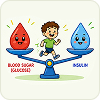
Rule #2: Increase Long-Acting Insulin if Needed
If blood sugar is high, your parent or caregiver may increase the long-acting insulin by 10–20% as guided by the doctor.
Rule #3: Check Blood Sugar Often
Test blood sugar every 2–3 hours to see how the Sugar Sneaks are behaving.

Rule #4: Give Rapid-Acting Insulin if Blood Sugar is High
If Sugar Sneaks are winning, the rapid-acting insulin superhero swoops in to bring levels down.
Rule #5: Rest & Drink Lots of Fluids
Drinking water or sugar-free fluids washes away Sugar Sneaks and keeps your body safe.
Child >20 kg: 1 cup every hour
Child ≤20 kg: ½ cup every hour
Treating the Sickness
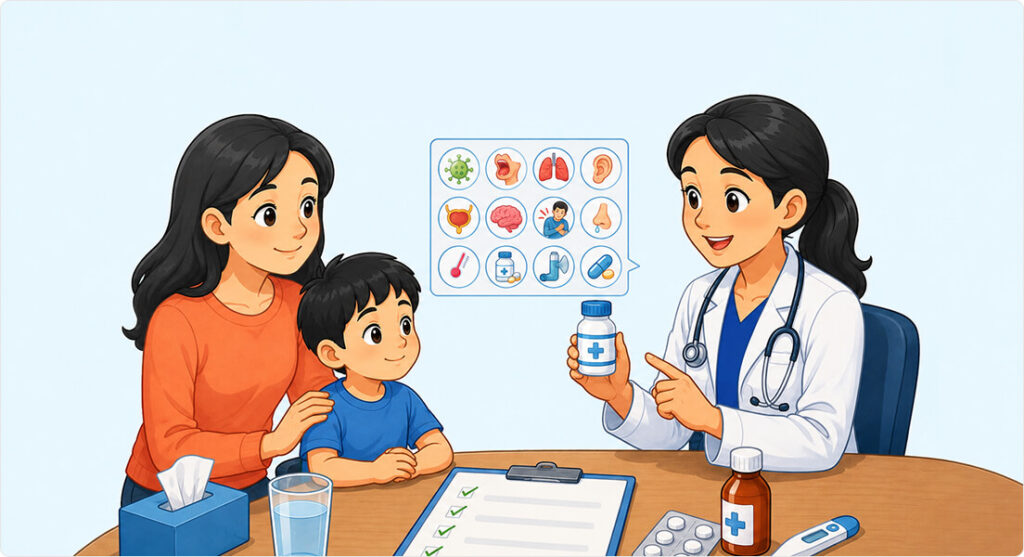
Your doctor is the ultimate superhero coach. Always follow their directions for:
- Medicines (like antibiotics or fever medicine)
- Nebulizers or inhalers
- Extra rest and fluids
When Sugar Sneaks Make Blood Sugar Too Low
Some sicknesses (like stomach bugs, vomiting, diarrhea) may lower blood sugar instead.
- Don’t stop insulin! Just small dose adjustments may be needed.
- Keep drinking fluids to prevent dehydration.
- If your child refuses fluids and blood sugar drops too low, a mini-glucagon pen can act as a magic rescue wand.
Sick-Day Hero Checklist
- Long-acting insulin given
- Blood sugar checked every 2–3 hours
- Rapid-acting insulin given if needed
- Drink plenty of water or sugar-free fluids
- Rest and sleep
- Call doctor if unsure