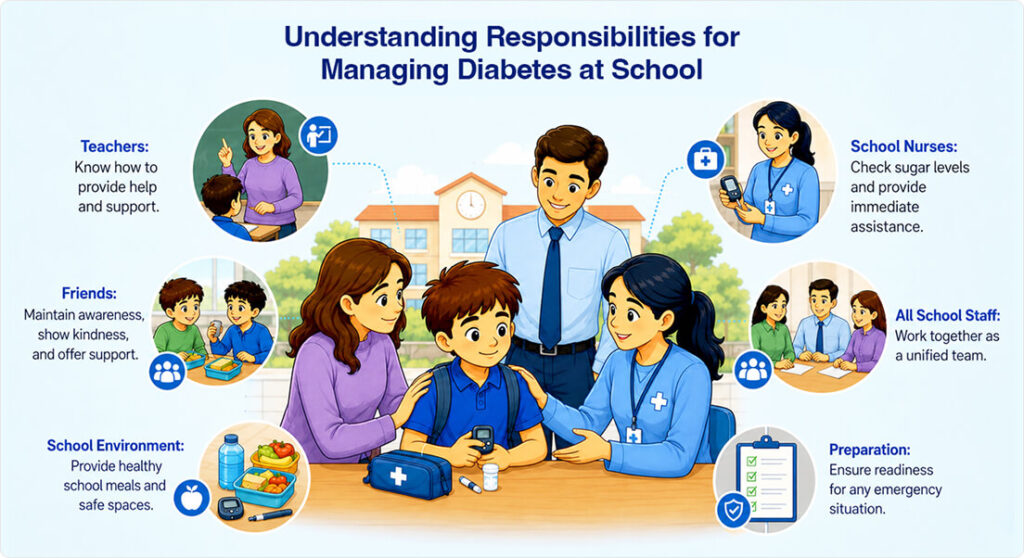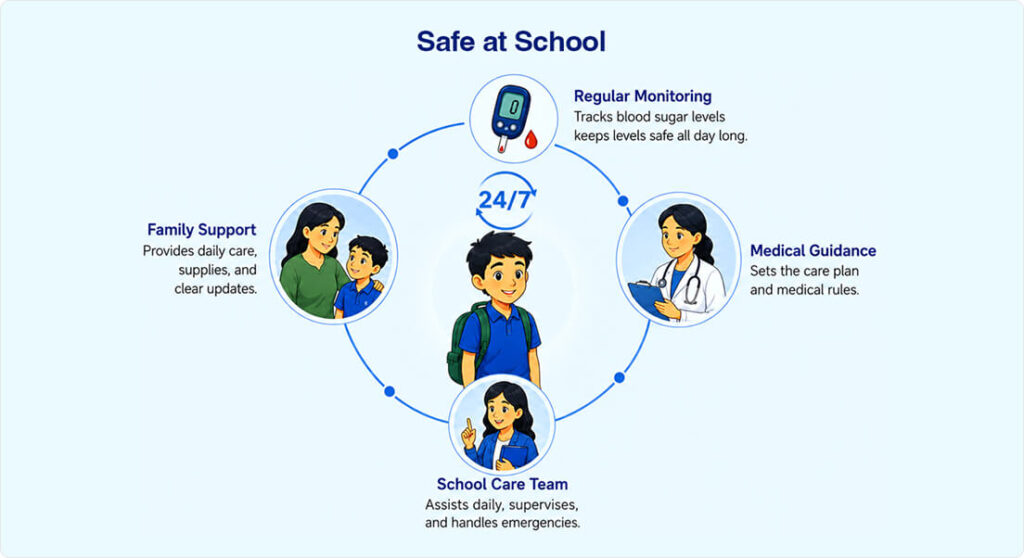
Managing Diabetes at School

Managing Diabetes at School

Simple Guide to Managing Diabetes at School

Why diabetes care at school matters 

Kids spend many hours at school. Good diabetes care keeps them: 

  • Safe 
  • Able to learn 
  • Able to join all activities 
  • Healthy now and in the future 

Diabetes care is a team effort between parents, school staff, and the healthcare team

understanding-responsibilities-school
Parent’s Guide

Parent’s Guide: Help manage your child’s diabetes at school
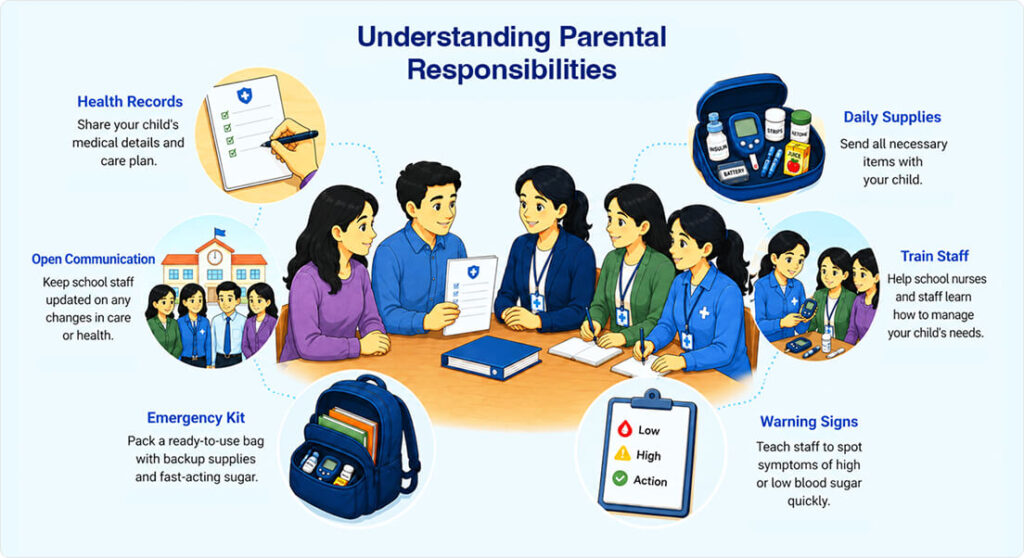
Understanding Parental responsibility

Before School Starts: What should you do?

Give the school a simple medical report that explains: 

How your child checks blood sugar (finger-prick or CGM) 

Insulin doses and when they are taken

Which meals/snacks need insulin 

Signs of low sugar and how to treat it (including glucagon, if needed) 

Signs of high sugar and ketones, and what to do 

Emergency phone numbers 

Communication is important!

Tell the school that your child has diabetes and make sure school staff know about your child’s condition including: 

Teachers 

Supervisors 

School nurse

Pack a diabetes kit

Keep a small bag in the child’s backpack with: 

Insulin and injection supplies 

Glucometer + test strips + lancets 

Ketone strips 

Extra glucometer batteries

Quick sugar (glucose tablets or juice) 

Make sure teachers and the nurse know where it is. 

Work with the school team!

To help school staff feel confident caring for your child, take time to guide them through key areas:

What low and high sugar look like 

How to treat low blood sugar levels (or hypos) 

How to use the glucometer / CGM if needed 

School’ Guide

School’s Guide: Supporting students with diabetes
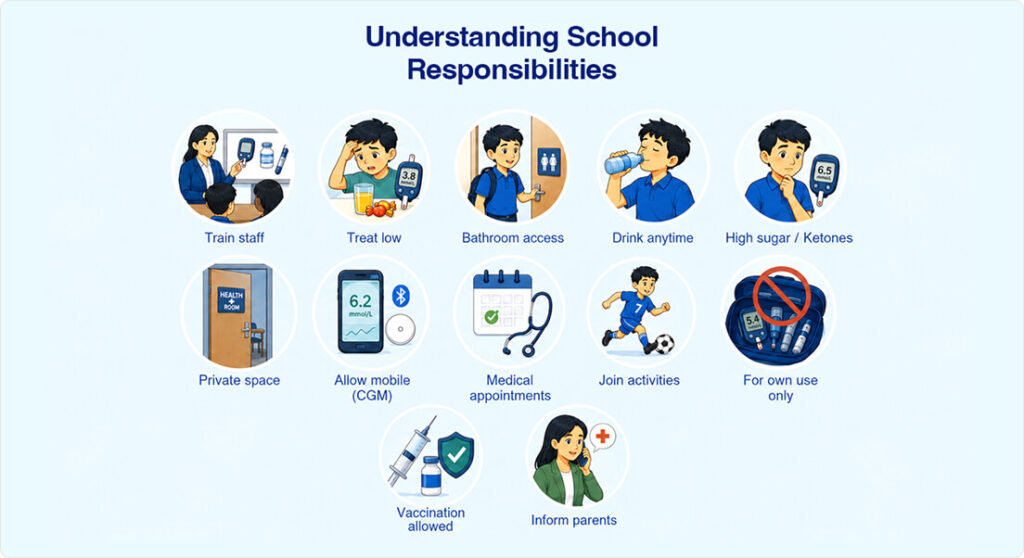
Understanding School Responsibility

What should schools do?

Teachers, staff, and school nurses play a vital role in keeping students with Type 1 diabetes safe, healthy, and ready to learn.

Train staff on basic diabetes care, blood sugar testing, and glucagon use 

Know the child’s symptoms of low and high blood sugar 

Give the child sugar immediately during a low, and stay with them until they feel better 

Allow the child to: test blood sugar, drink water anytime, use the bathroom anytime 

Provide a private space for testing/injections 

Allow phone use if the phone connects to CGM (school policy) 

Allow absences for diabetes clinic visits 

Include the child in all activities (PE, trips, events) 

Never use the child’s insulin or medical tools for another student 

Do not block regular school vaccinations unless a doctor says so 

Kid’s Guide

Kid’s Guide: What Kids Can Do at Different Ages

Nursery & Kindergarten (Ages 3–5)

Full Adult Support: Very young children need complete adult assistance for all aspects of diabetes care.

Constant Supervision: A parent, guardian, or trained staff member should always be nearby.

Watch for Subtle Signs: Young children often cannot clearly describe how they feel when their blood sugar changes. Adults need to keep an eye out for physical symptoms like sudden mood changes, tiredness, or shakiness.

Primary School (Ages 6–10)

Hands-on Help: Kids can start actively helping with finger-prick checks or scanning their Continuous Glucose Monitor (CGM) under supervision.

Expressing Feelings: Children at this age can usually explain how they feel when their numbers are too high or too low.

Guided Injections: Students can practice injecting insulin or pressing the button on their pump, ideally with a parent or school nurse watching closely.

Children should not decide their own insulin doses. Parents or care teams must determine all dosing amounts.

Middle School (Ages 11–13)

Growing Independence: Pre-teens can reliably check their own blood sugar and administer their insulin doses.

Managing Daily Tasks: They can handle most routine diabetes tasks independently throughout the day.

Shared Decision-Making: Parents still guide and verify insulin dosing decisions to make sure calculations are safe and accurate.

Exception for Lows: When blood sugar drops low, adults should step in to assist with management.

High School (Ages 14–18)

Full Daily Management: Teens can check blood sugar, administer insulin, and adjust doses independently in normal, day-to-day situations.

Proactive Prevention: High schoolers learn to manage high readings, recognize early warning signs, and prevent low blood sugars during sports or activities.

Preparing for the Future: Parents shift toward a supervisory role, guiding teens as they prepare to transition to adult healthcare management.

Summary

Summary

summary-responsibility

Managing diabetes at school keeps children safe, included, and healthy
Good school care prevents complications and helps kids learn and participate confidently. 
The best care happens when parents, school staff, and healthcare teams work together

References

References

ISPAD: The ISPAD Clinical Practice Consensus Guidelines 2024 — This includes a Position Statement on Type 1 Diabetes in Schools.  

ADA: Standards of Care in Diabetes — 2025 (including the chapter on children & adolescents)

ADA Safe at School Initiative: Guidance on training, legal rights, and school care tasks.  

Would you like to subscribe
to our newsletter?